

Orbit Hydraulic Motor
What is Orbit Hydraulic Motor?
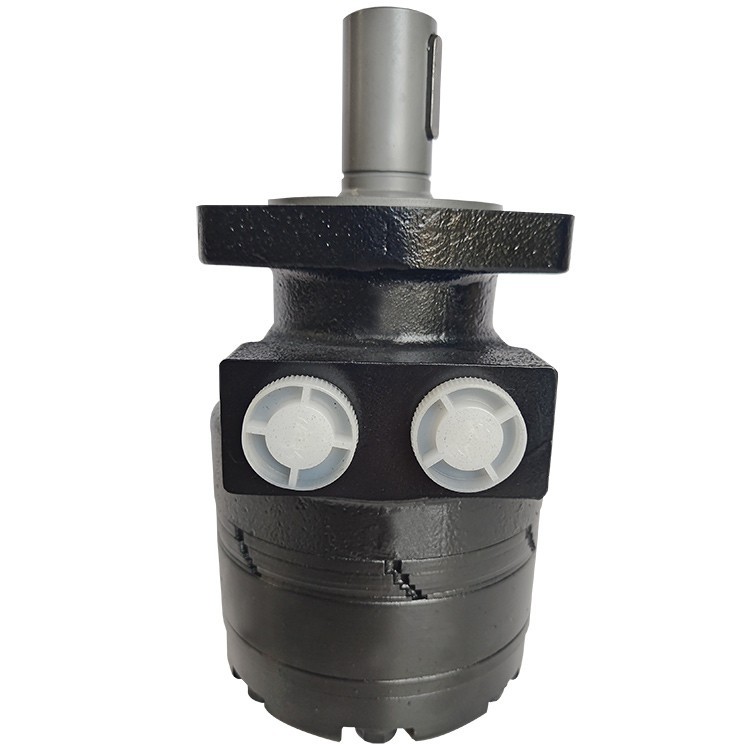
A orbital hydraulic motor is a type of hydraulic motor that converts hydraulic energy into mechanical energy. It is designed to provide rotary motion through the use of an orbiting rotor and a stationary housing. The hydraulic fluid is pumped into the motor through a port, which imparts force on the rotor to create rotational movement. These motors are often used in heavy-duty industrial applications, such as construction equipment, agricultural machinery, and mining equipment.
Advantages of Orbit Hydraulic Motor
Greater power output
They have a higher power density; in comparison with the other designs. Orbital hydraulic motors have the greatest power-to-size ratios and thus provide the highest output power in the smallest sizes.
Better torque
These hydraulic motorsallow for high levels of torque output to be used in applications that need heavy lifting or the production of very high rotative forces. Orbital hydraulic motors offer the benefit of transmitting low output speed for precise controlled applications or slower operation.
Easy design
They are far easier to engineer into installations and to maintain than piston motors, and he found them even easier to troubleshoot. In the instance of recycling systems, pumps last longer because of their design and energy.
Improved durability
Orbital hydraulic motors have better durability compared to vane motors by way of construction and number of perishable parts, ensuring durability under most operating conditions.
Efficiency
Orbital hydraulic motors will deliver high efficiency in working by transforming hydraulic energy into mechanical power with negligible losses. This saves the cost of a high-quality machine and making it perform at a higher level.
-
![BTE]()
-
![OMER BMER Serial Hydraulic Motor Same As Danfoss DALI PARKER WHITE]() OMER BMER Serial Hydraulic Motor Same As Danfoss DALI PAR...OMER BMER Serial hydraulic motor same as Danfoss DALI PARKER WHITE Snow removal truck series.read more
OMER BMER Serial Hydraulic Motor Same As Danfoss DALI PAR...OMER BMER Serial hydraulic motor same as Danfoss DALI PARKER WHITE Snow removal truck series.read more -
![10K BMV OMV Serial Hydraulic Motor Same As Danfoss]() 10K BMV OMV Serial Hydraulic Motor Same As Danfoss10K OMV BMV Serial low speed high torque hydraulic motor same as Danfossread more
10K BMV OMV Serial Hydraulic Motor Same As Danfoss10K OMV BMV Serial low speed high torque hydraulic motor same as Danfossread more -
![6K OMT BM6 Serial Hydraulic Motor Same As Danfoss]() 6K OMT BM6 Serial Hydraulic Motor Same As Danfoss6K BMT OMT BM6 Serial Low Speed High Torque Hydraulic Motor Same As Danfossread more
6K OMT BM6 Serial Hydraulic Motor Same As Danfoss6K BMT OMT BM6 Serial Low Speed High Torque Hydraulic Motor Same As Danfossread more -
![OML BML OMG BMG 630 625 Hydraulic Motor Wood Grabbers Series]() OML BML OMG BMG 630 625 Hydraulic Motor Wood Grabbers SeriesGolden claw rhino Dragon Saint OML BML OMG BMG 630 625 two-way relief valve grab wood machine Grab steel machine rotary hydraulic Wood Grabbers Seriesread more
OML BML OMG BMG 630 625 Hydraulic Motor Wood Grabbers SeriesGolden claw rhino Dragon Saint OML BML OMG BMG 630 625 two-way relief valve grab wood machine Grab steel machine rotary hydraulic Wood Grabbers Seriesread more -
![2K B2K BM5 OMS Series Standard Motor Hydraulic Orbital Motor]() 2K B2K BM5 OMS Series Standard Motor Hydraulic Orbital Motor2K (OMS/BM5) series motor adapt the advanced Geroler set design with disc distribution flow and high pressure. The unit can be supplied the individual variant in operating multifunction in...read more
2K B2K BM5 OMS Series Standard Motor Hydraulic Orbital Motor2K (OMS/BM5) series motor adapt the advanced Geroler set design with disc distribution flow and high pressure. The unit can be supplied the individual variant in operating multifunction in...read more -
![6K BM6 Serial High Torque Hydraulic Motor]() 6K BM6 Serial High Torque Hydraulic Motor6K Standard, 6KW wheel motor, 6KS Bearingless, 6KB hydraulic motor with brakerread more
6K BM6 Serial High Torque Hydraulic Motor6K Standard, 6KW wheel motor, 6KS Bearingless, 6KB hydraulic motor with brakerread more -
![Standard Wheel Motor B4K 4K BM6 Hydraulic Motor]() Standard Wheel Motor B4K 4K BM6 Hydraulic MotorStandard Wheel Motor B4K 4K BM6 Hydraulic Motor Aerial Work Vehicle Street Sweeperread more
Standard Wheel Motor B4K 4K BM6 Hydraulic MotorStandard Wheel Motor B4K 4K BM6 Hydraulic Motor Aerial Work Vehicle Street Sweeperread more -
![BM6 B6K Serial High Torque Hydraulic Motor]() BM6 B6K Serial High Torque Hydraulic MotorFactory outlet Drill Motor Hoist Motor Hydraulic Winch Motor BM6 B6K Serial High Torque Hydraulic Motorread more
BM6 B6K Serial High Torque Hydraulic MotorFactory outlet Drill Motor Hoist Motor Hydraulic Winch Motor BM6 B6K Serial High Torque Hydraulic Motorread more -
![OML BML OMG BMG 630 625 Hydraulic motor]() OML BML OMG BMG 630 625 Hydraulic motorGolden claw rhino Dragon Saint OML BML OMG BMG 630 625 two-way relief valve grab wood machine Grab steel machine rotary hydraulicread more
OML BML OMG BMG 630 625 Hydraulic motorGolden claw rhino Dragon Saint OML BML OMG BMG 630 625 two-way relief valve grab wood machine Grab steel machine rotary hydraulicread more -
![BMT OMT Serial Hydraulic Motor Same As Danfoss]() BMT OMT Serial Hydraulic Motor Same As DanfossFactory direct supply BMT/OMT Serial Low Speed High Torque Hydraulic Motor Same As Danfossread more
BMT OMT Serial Hydraulic Motor Same As DanfossFactory direct supply BMT/OMT Serial Low Speed High Torque Hydraulic Motor Same As Danfossread more -
![BMV OMV Serial Hydraulic Motor Same As Danfoss]() BMV OMV Serial Hydraulic Motor Same As DanfossHot selling BMV/OMV Serial low speed high torque hydraulic motor same as Danfossread more
BMV OMV Serial Hydraulic Motor Same As DanfossHot selling BMV/OMV Serial low speed high torque hydraulic motor same as Danfossread more


Why Choose Us
Our product
The main products of our company are cycloidal hydraulic motor, and we also produce supporting products like hydraulic winch, hydraulic brake, hydraulic rotary reducer, hydraulic parallel valve, hydraulic steering gear, hydraulic oil pump.
Our equipment
As a professional manufacturer of hydraulic components in china, our company is committed to the development of high-tech products and manufacturing technology. We have cnc forming grinder, cnc internal grinder, cnc external grinder, cnc lathe, cnc milling machine, cnc gear hobbing machine.
Production market
Our company has the right to import and export goods and technology, and our products exported to the united states, turkey, germany, malaysia, britain, italy, poland, thailand and other 10 countries and regions.
Our service
We have professional sales and technical team to listen to customer's needs at any time, and to meet your requirement on price and quality at our best.
Main Features of Orbit Hydraulic Motor
Adopting end face distribution and axial flow distribution, the structure is simple and compact, and the flow matching precision is high.
Using the insert stator and rotor pair, high mechanical efficiency, long life with high pressure operation.
The use of double-corner ball bearings, can withstand large radial and axial loads, low friction, high mechanical efficiency.
Advanced flow distribution mechanism design, featuring high flow matching precision and automatic wear compensation.
The motor can be used in series and parallel, when connected in series should be connected to the external drain.
Using tapered roller bearing support design, with a large radial load capacity, so that the motor can directly drive the working mechanism.
Types of Orbital Hydraulic Motor
Gear motor: In order to adapt to the forward and reverse requirements in the structure, the inlet and outlet of the gear motor is equal and symmetrical, and there is a separate oil leakage port, which can lead the oil leakage of the bearing part out of the shell. In order to reduce the starting friction moment of the motor, rolling bearings are used; The gear hydraulic motor has more teeth than the pump, also to reduce torque pulsation. Therefore, gear motors are generally used in construction machinery, agricultural machinery and mechanical equipment with low requirements for torque uniformity.
Vane motor: Due to the pressure oil action, the force imbalance causes the rotor to generate torque. The output torque of the vane hydraulic motor is related to the pressure difference between the displacement of the hydraulic motor and the inlet and outlet of the hydraulic motor, and its speed is determined by the flow size of the input hydraulic motor. Since hydraulic motors generally require forward and reverse, the blades of vane hydraulic motors should be placed radially.
Radial piston motor: It is divided into single-acting connecting rod type radial piston motor, multi-acting internal curve piston motor, plunger type high-speed hydraulic motor. Their common working principle is that when the pressure oil enters the bottom of the plunger in the cylinder body through the window of the fixed oil distribution shaft, the plunger extends outward and tightly holds against the inner wall of the stator, due to the eccentric distance between the stator and the cylinder body.At the contact between the plunger and the stator, the reaction force of the stator on the plunger can be decomposed into two divided forces.
Axial piston motor: In addition to the valve type distribution, other forms of axial piston pump can be used as hydraulic motors in principle, that is, axial piston pumps and axial piston motors are reversible. The working principle of the axial piston motor is that the oil distribution plate and the swashplate are fixed, and the motor shaft is connected to the cylinder block and rotates together.
How to Choose the Right Orbital Hydraulic Motor
Efficiency
When choosing a orbital hydraulic motor for a system, efficiency is a factor to consider. Orbital hydraulic motors are designed to operate at a very high power to size ratio. They also have the highest output torque in relation to their input force, making them ideal for applications that need to move large amounts of mass quickly.
Noise
When selecting a orbital hydraulic motor, it’s important to consider how noisy the system will be. One way to determine the right noise level is by measuring the sound from various points around the system. This will help you pinpoint the source of the problem and determine what steps need to be taken. In most cases, the main culprit of noise is the pump or other motor.

Size
Orbital hydraulic motors vary in size, depending on the fluid pressure and volume flow requirements of the system. Unlike pumps, which use valves to deliver hydraulic fluid to a motor, orbital hydraulic motors contain a series of pistons that slide laterally on a flat surface inside the housing.
Load capacity
If you have ever used a hydraulic cylinder to lift something, you know that the size of the cylinder can make all the difference in whether the load can be safely lifted or not. Choosing the right size can save you time and money by preventing a failed lift and the loss of material or equipment. In the same way, choosing the right sized orbital hydraulic motor is crucial for your application to run correctly and safely.
Application of Orbital Hydraulic Motor
Engineering machinery
Orbital hydraulic motors are widely used in various engineering machinery such as excavators, loaders, bulldozers, etc. It can accurately control the power output of the machine by controlling the flow and pressure, so that the machine can better adapt to various working conditions and improve production efficiency.
Wind power generation
Orbital hydraulic motors are used as driving elements for rotating blades in wind turbines. It has the characteristics of high torque output, low-speed stability and long life, which ensures the stability and reliability of the unit in complex wind environments.
Aerospace
In the field of aerospace, orbital hydraulic motors are used in key components such as flaps and flap bearings. Due to its light weight, small size and low noise, it can meet the high lightweight requirements of aircraft for power components to ensure the high performance, high precision and high reliability of aircraft and spacecraft.
Industrial Automation
Orbital hydraulic motors can be widely used in the field of industrial automation, such as machine tools, sleeving machines, wire reels, punching machines and other mechanical equipment. It can provide high-precision, high-load driving force for these mechanical equipment, making the operation of mechanical equipment more stable and efficient.
What are the Components of a Orbital Hydraulic Motor
Orbital hydraulic motor casing
The casing of a orbital hydraulic motor is made of metal material, which is used for assembling and fixing other parts, and plays the role of fixing, sealing and protecting the internal parts.
01
Bearings
The bearings of a orbital hydraulic motor are mainly used to support the rotating bearing parts inside the motor so that they can rotate smoothly and freely.
02
Gear set
The gear set in a orbital hydraulic motor usually consists of several gears, some of which are driven by hydraulic pressure and convert hydraulic energy into mechanical energy, thus realizing the rotation of the motor.
03
Hydraulic cylinder
The hydraulic cylinder is an important component in a orbital hydraulic motor, used to receive and transfer hydraulic energy to drive the motor to rotate.
04
Drive shaft
The orbital hydraulic motor drive shaft is a key component that connects the hydraulic cylinder block to the gear set and converts hydraulic pressure into rotational power for the motor by transferring hydraulic energy.
05
Orbit Hydraulic Motor Start-up and Assembly instructions
The oil used in the hydraulic system must be completely clean of impurities before installing the orbital hydraulic motor. Also clean the internal walls of the hydraulic reservoir. The hydraulic system (motor, cylinders, pump, pipes, fittings, and other components) must be completely purged to avoid air in the hydraulic circuit.
Check the condition of the connections and their seals, the condition of the rigid/flexible pipes, and the condition of the reservoir. Ensure there are no leaks or air entering the circuit (cavitation). The type of hydraulic oil must be suitable for the hydraulic motor and the hydraulic system itself as well as for the temperature range for which the hydraulic motor and hydraulic system have been designed.
Change the filters and add clean hydraulic oil. Reduce the pressure of the safety valves to the minimum. Run the motor without load at minimum speed and with zero (or minimum) pressure for several minutes and gradually increase the rpm and pressure to the level recommended by the machine manufacturer.
Avoid axial and radial stresses on the orbital hydraulic motor shaft as much as possible. The diameters of pipes, hoses, fittings, accessories, and other components of the oil flow must be properly dimensioned and in accordance with the maximum oil flow that may be in the hydraulic system. All hoses and piping of the hydraulic circuit must be free of very tight bends. To reduce the level of vibrations, it is recommended to use flexible piping instead of rigid piping.
These instructions are general for orbital hydraulic orbital motors. Each motor model may have its corresponding manufacturer's specifications, so in case of doubt, the specific catalog of your hydraulic motor model must be consulted.
Maintenance Tips for Orbital Hydraulic Motor
Regular inspection: Periodically inspect the motor for signs of wear, leaks, and damage. Check for loose or damaged hoses, fittings, and seals. Early detection of issues can prevent more severe problems and extend the motor's lifespan.
Cleanliness: Keep the motor and its surroundings clean. Dirt and debris can cause contamination in the hydraulic system, leading to premature wear and damage. Use appropriate cleaning methods to avoid damaging components.
Proper lubrication: Ensure all moving parts are adequately lubricated. Proper lubrication reduces friction, wear, and heat buildup, enhancing the motor's efficiency and longevity. Use the lubricant specified by the manufacturer.
Seal and O-ring replacement: Regularly inspect and replace seals and O-rings as needed. These components prevent leaks and maintain the integrity of the hydraulic system. Worn or damaged seals can lead to fluid leaks and reduced performance.
Operational checks: Perform routine operational checks to ensure the motor is functioning correctly. Listen for unusual noises, vibrations, or changes in performance. Address any abnormalities immediately to prevent further damage.
Our Factory
Shandong luke hydraulic technology co., ltd., founded in 2020, is a professional enterprise engaged in the technical development, manufacturing and marketing of cycloidal hydraulic components.The company takes innovation as the development direction of the company, while constantly absorbing the essence of foreign technology. Our business philosophy is "people-oriented, internationalization, informatization, marketization, scientization and standardization". The enterprise spirit "science and technology, industry pioneer", and service aim "create products, customer first ", create the vigorous vitality of luke hydraulic.


FAQ
We're professional orbit hydraulic motor manufacturers and suppliers in China, specialized in providing high quality customized service. We warmly welcome you to buy cheap orbit hydraulic motor made in China here from our factory.
5tons rotary hydraulic motor, bmph horizontal oil port orbit hydraulic motor with spool valve, 10tons rotary hydraulic motor